Hello All,
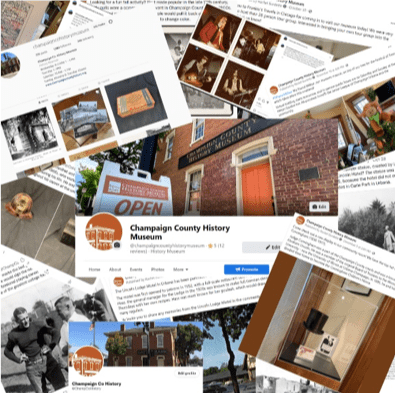
I am John Byer, a senior at UIUC with a major in History. I originally chose to intern at a museum because of my interest in history: I wanted to broaden my horizons of careers that don’t involve being a teacher. I had previously taken a course on museum studies and remembered the enjoyment I had going t museums in in Chicago, so thought I would try it out to gain some experience. I interned at the Champaign County History Museum and found the experience very rewarding as well as challenging. Through this experience, I learned a lot more about working in a museum including the day-to-day as well as the big-picture overarching goals.
For example, in the day-to-day, I did a lot of important but menial work like cataloguing new documents and artifacts or updating older catalogue entries. Although this was not the most exciting work, it taught me about the software and procedures for handling museum artifacts. This helped illuminate the museum’s larger context, as any museum will have a collection that has new items coming in or old artifacts going out. Another job I handled was digitizing oral histories. This was a fairly unique experience as I had to to change the format of old tapes into mp3s. The oral histories were pretty fun, as you never knew what you would get from tape to tape. The tapes went from people talking about their old houses and friends to some people doing stand-up comedy in an old bar.
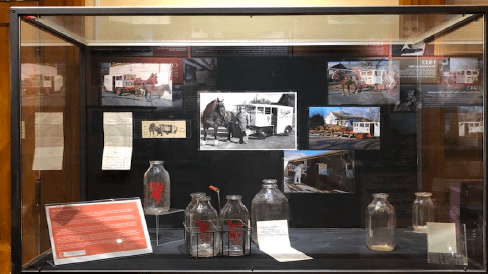
One of the largest projects I worked on was the creation of a new exhibit for the museum. I found the exhibit work to be some of the most rewarding and challenging. I was tasked with creating an exhibit on the Urbana Pure Milk Company. It was a demanding project as I had to do research in local archives and then draft the information into labels. However, it was rewarding to construct a new exhibit and put it on display for guests to view a piece of locla history that they may not have seen or remembered in a long time. I also worked as part of the education committee looking at the bigger picture of how the museum could draw in more people and audiences. Appealing to a broader audience is a challenge all museums face. My experience in the museum helped me contextualize how museums work to better fulfill the needs of the public and the museum as an institution.





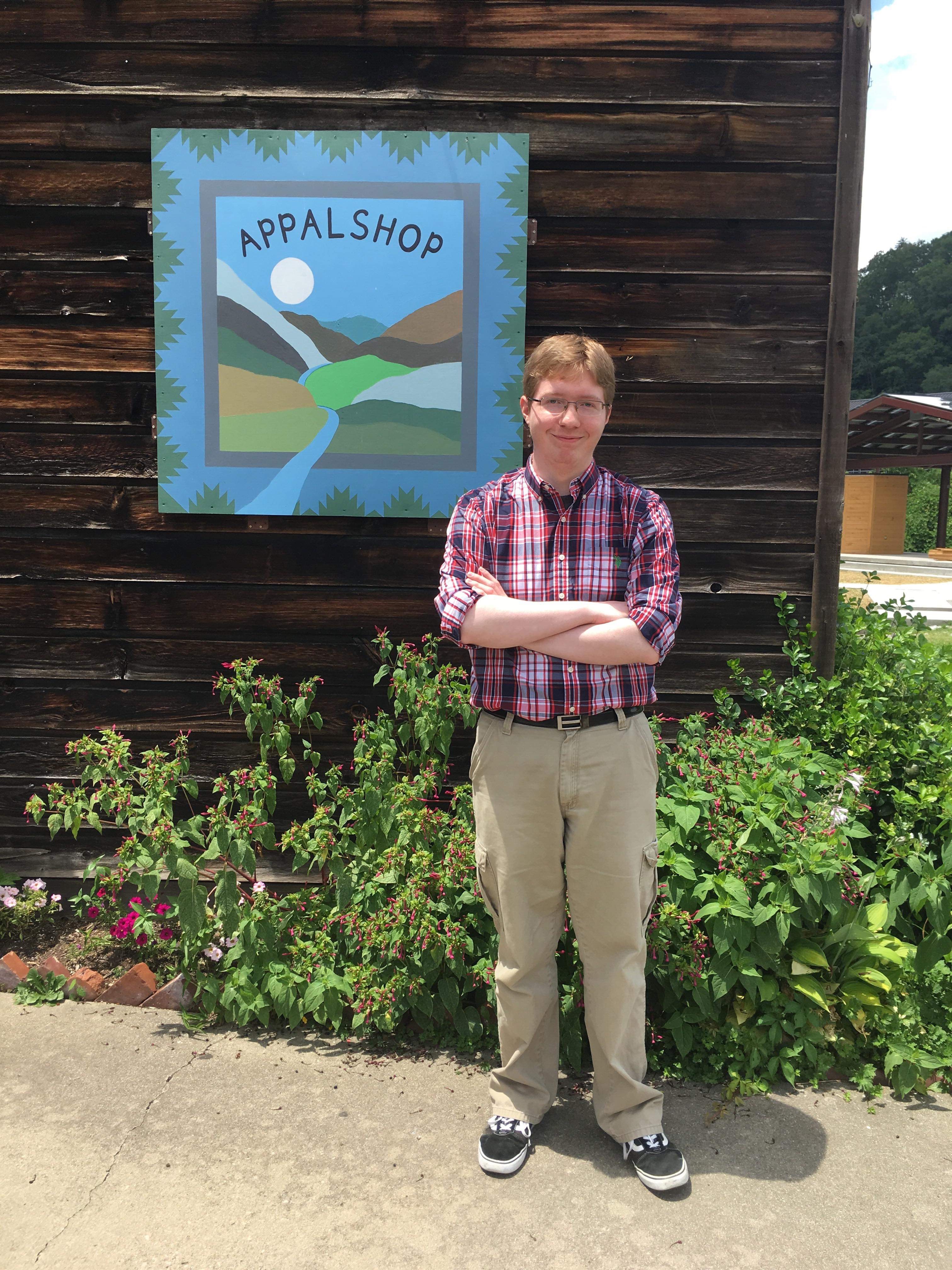 This commitment to community histories led me back to my home state this past summer. Looking to both reconnect with those histories and to build my professional skills, I accepted an internship at Appalshop Archive in Whitesburg, Kentucky. Founded in 1969 during the War on Poverty as the Appalachian Film Workshop, Appalshop today serves Central Appalachia as a regional arts and media center. Its archive unit is responsible for preserving the films and other media produced by Appalshop since its inception (including In the Good Old Fashioned Way, directed by Appalshop’s co-founder).
 With the guidance of moving image archivist Caroline Rubens, I learned basic film handling. Inspecting 16mm film reels from the 1950s to 1980s, I wrote physical condition reports on home movies documenting daily life in some of the places I’d known growing up and then rehoused the historic reels into new archive-safe, acid- free containers.
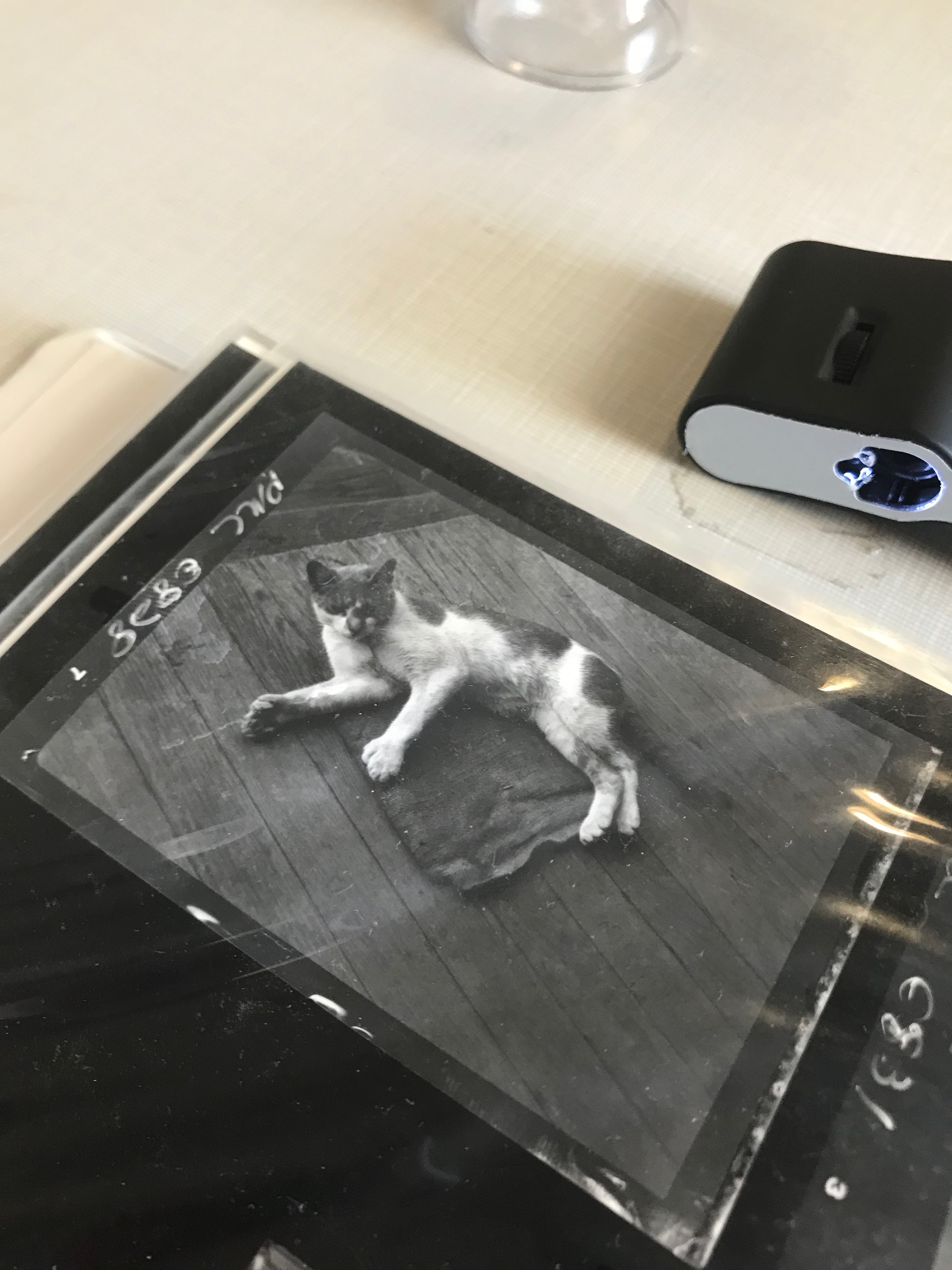 Operating in a rural area where there’s a relative lack of professionally trained archivists, Appalshop Archive also accepts and preserves films, documents, and artifacts from the surrounding communities. One of the most impressive examples of this is the William R. “Pictureman” Mullins Collection, for which I scanned photographic negatives. Mullins, an early twentieth century commercial photographer, snapped more than 3,000 photos documenting life in rural southeastern Kentucky and southwest Virginia. From local baptisms and funerals, to African American family portraits and farm animals, this collection is a window into peoples and places in Appalachia that are often underrepresented in traditional archives or histories.\
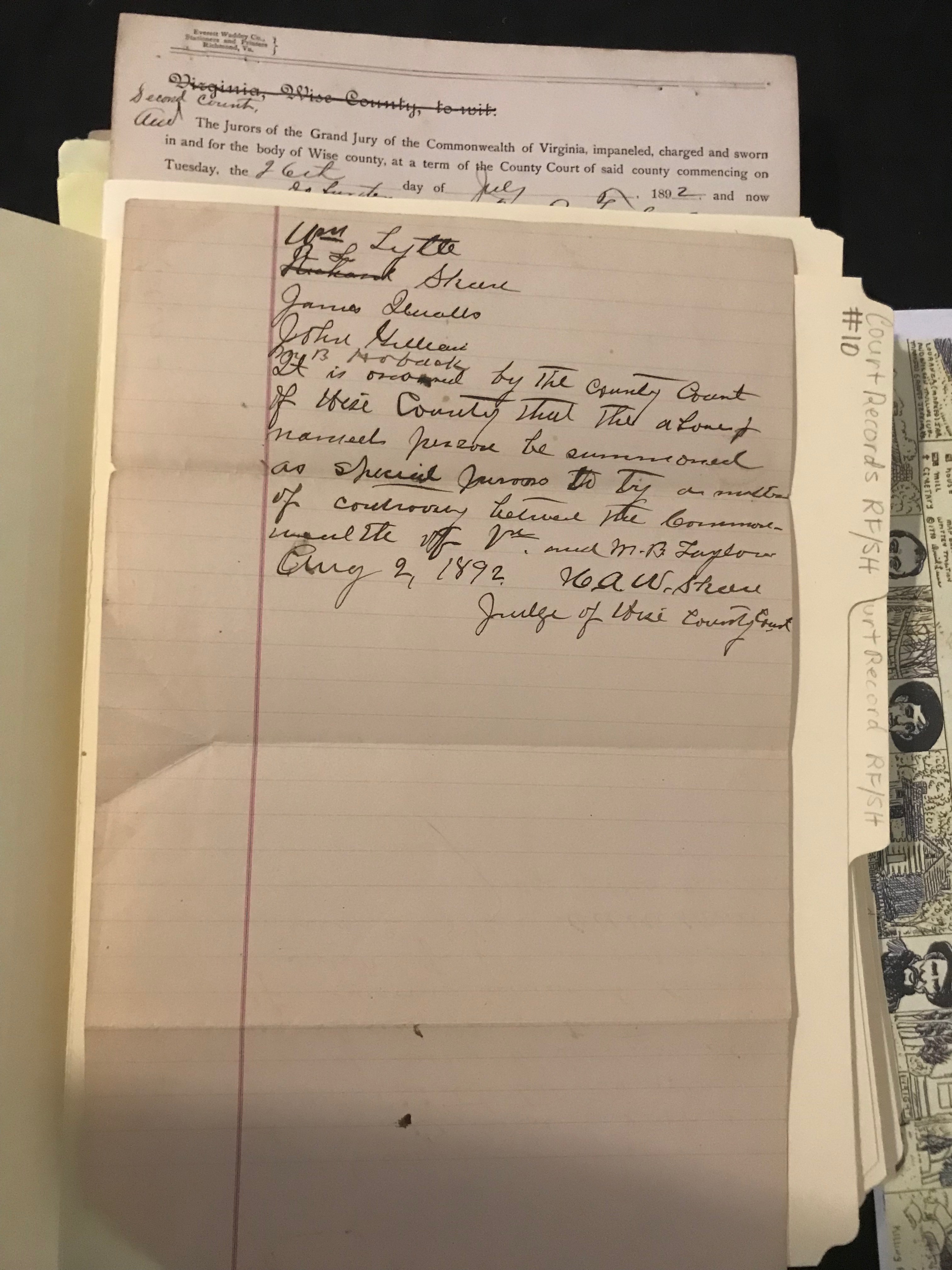 Another highlight from my time at Appalshop Archive was using nineteenth century court records and twentieth century oral history interviews to co-curate and help install a small exhibit on an Appalshop play/film entitled “Red Fox/Second Hangin’”.
 Public History @UIUC